Amazon SageMaker Notebooks
Situation
I was working as a Senior Design Technologist on the SageMaker Unified Studio (SMUS) UX team. The team consisted of approximately eight UX designers and myself, partnering closely with multiple engineering teams responsible for various micro-front-end applications.
In September 2025, with re:Invent just three months away, the organization was preparing to launch SageMaker Notebooks—a brand-new product experience. The UI required significant refinement to meet design system standards, align with UX intent, and be ready for executive visibility at launch.
Task
I was asked to lead the UI styling effort for SageMaker Notebooks—ensuring components adhered to evolving design system standards, met UX guidelines, and achieved a high level of visual and interaction polish ahead of re:Invent.
Action
I partnered closely with the Lead UX Designer, meeting nearly daily to align on design intent and implementation strategy. My role bridged design and engineering:
- Advised on technically feasible approaches
- Built prototypes to validate interaction and styling patterns
- Made direct code contributions to ensure accurate translation of UX designs
- Reviewed pull requests and paired with engineers to uphold UI quality standards
In parallel, I attended daily engineering standups to stay aligned on delivery timelines and proactively resolve styling or implementation risks.
Navigating a Design System Migration
Complicating the effort, the design system was mid-transition to version 2.0. This meant that components used at the start of development would not match the final underlying implementation. To manage this:
- I worked closely with the design systems team to ensure proper adoption of the updated architecture
- Iterated on components multiple times as system updates landed
- Ensured visual consistency despite shifting foundations
Additionally, several required UI patterns did not yet exist in the design system roadmap. In those cases, I:
- Collaborated with the UX designer to define scalable patterns
- Built new components when necessary
- Applied styling and refinements to engineer-built components to ensure pixel-accurate fidelity
I also advised on front-end best practices—such as balancing styled components and CSS usage to optimize performance without compromising maintainability.
Throughout the project, I continuously refined the UI to ensure it met the quality bar required for leadership reviews and executive demos.
Result
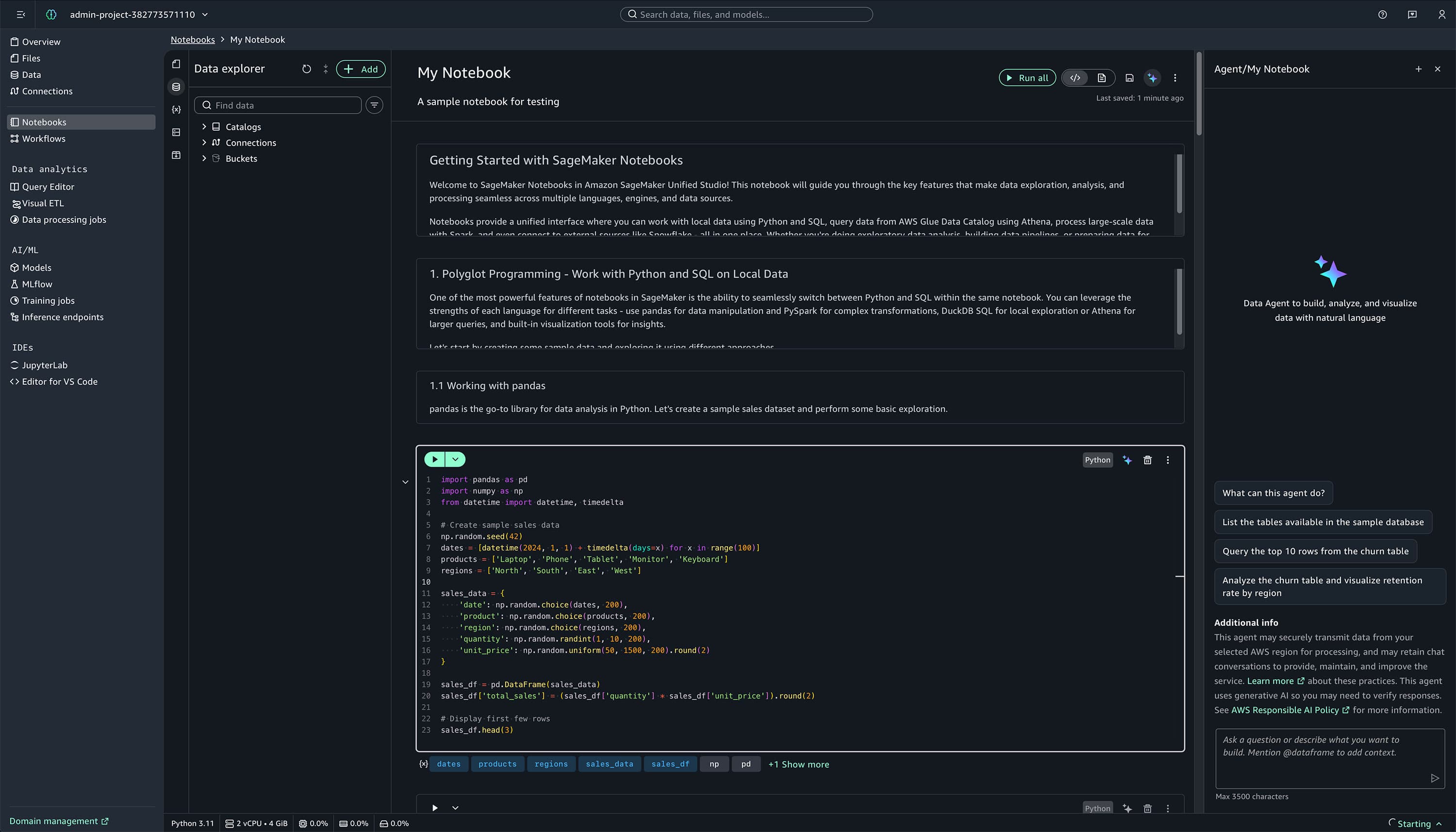
SageMaker Notebooks launched at re:Invent 2025 with a highly polished, design-system-aligned user interface.
My contributions:
- Elevated the visual and interaction quality of a net-new product
- Ensured alignment with the updated design system despite mid-project changes
- Reduced rework by proactively coordinating across UX, design systems, and engineering
- Maintained a consistently high quality bar across teams
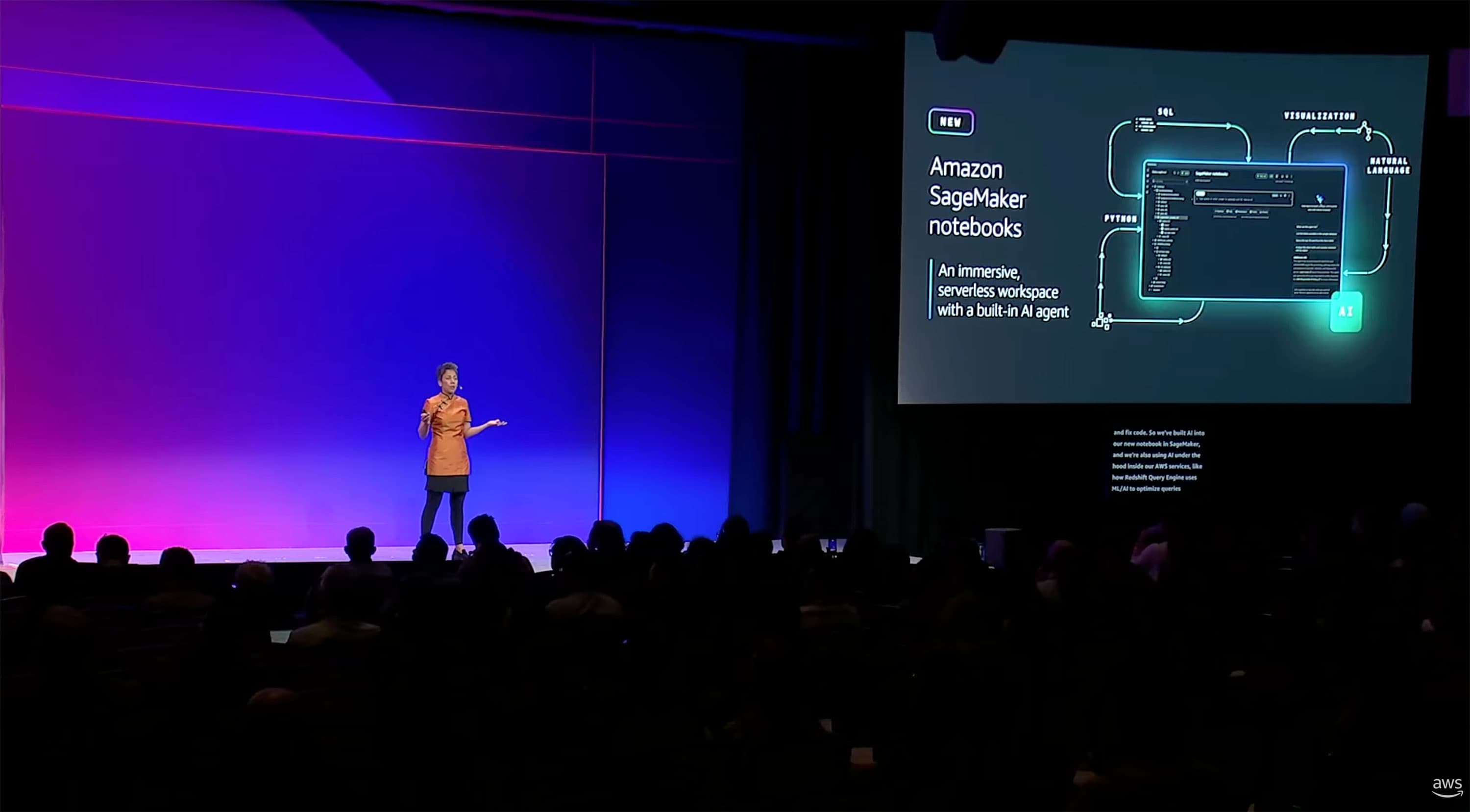
The product was later showcased by an AWS VP during a 2025 re:Invent keynote presentation.
I took strong ownership of UI excellence—following through across disciplines to ensure every detail met a high standard and that the final customer experience reflected the intended UX vision.