AWS Redshift Query Profiler
Situation
I was a Design Technologist on the AWS Redshift Console engineering team, working alongside approximately ten engineers.
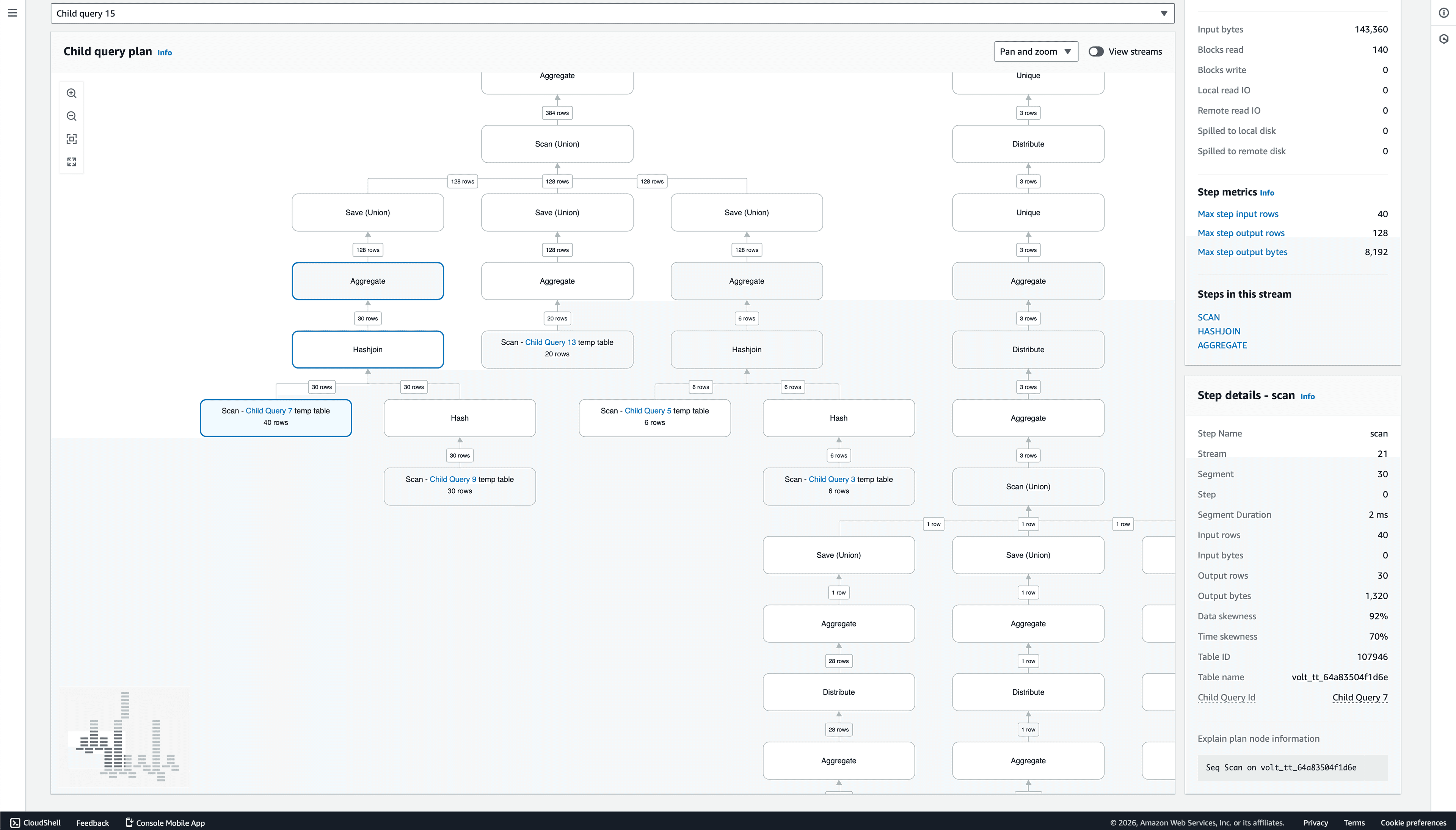
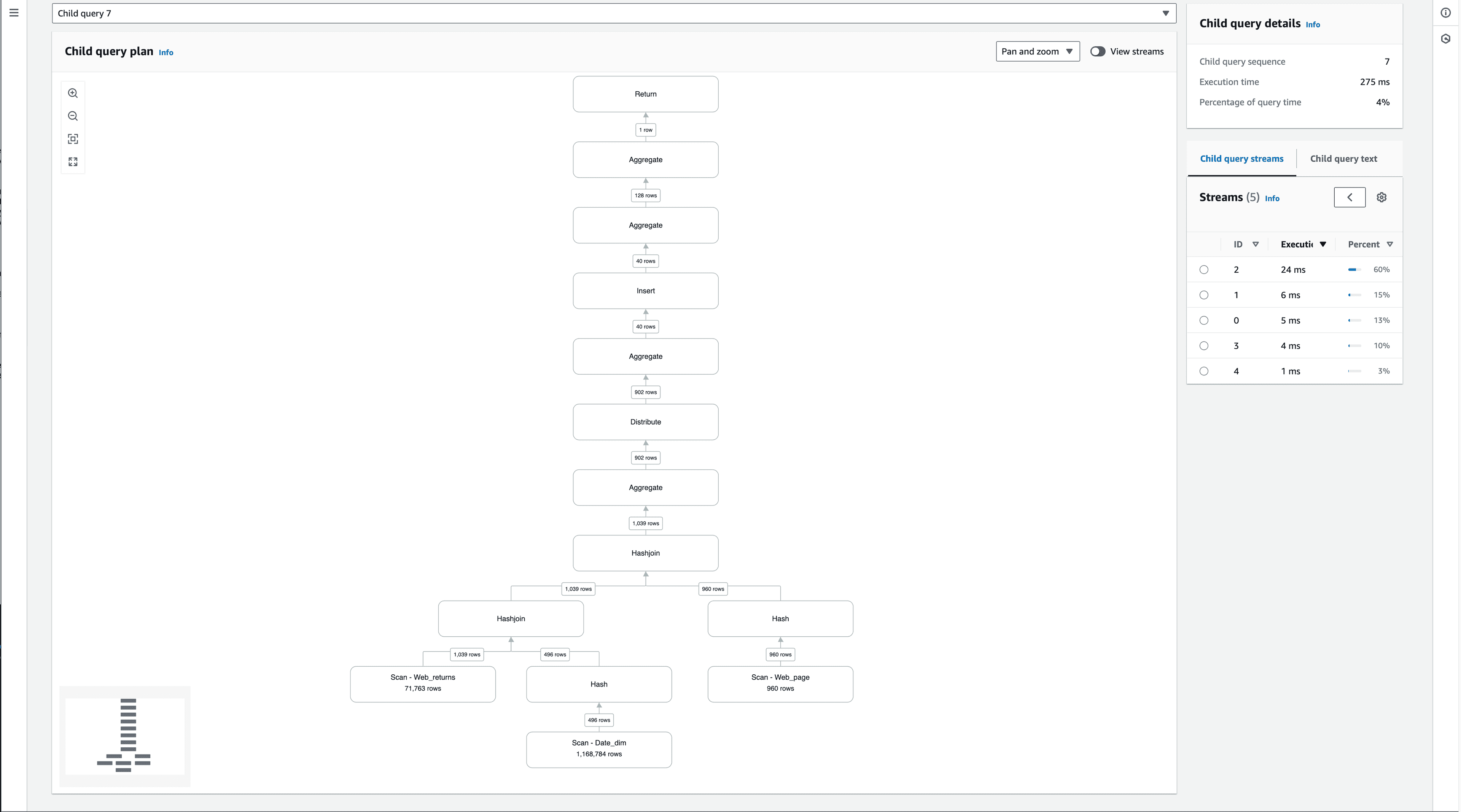
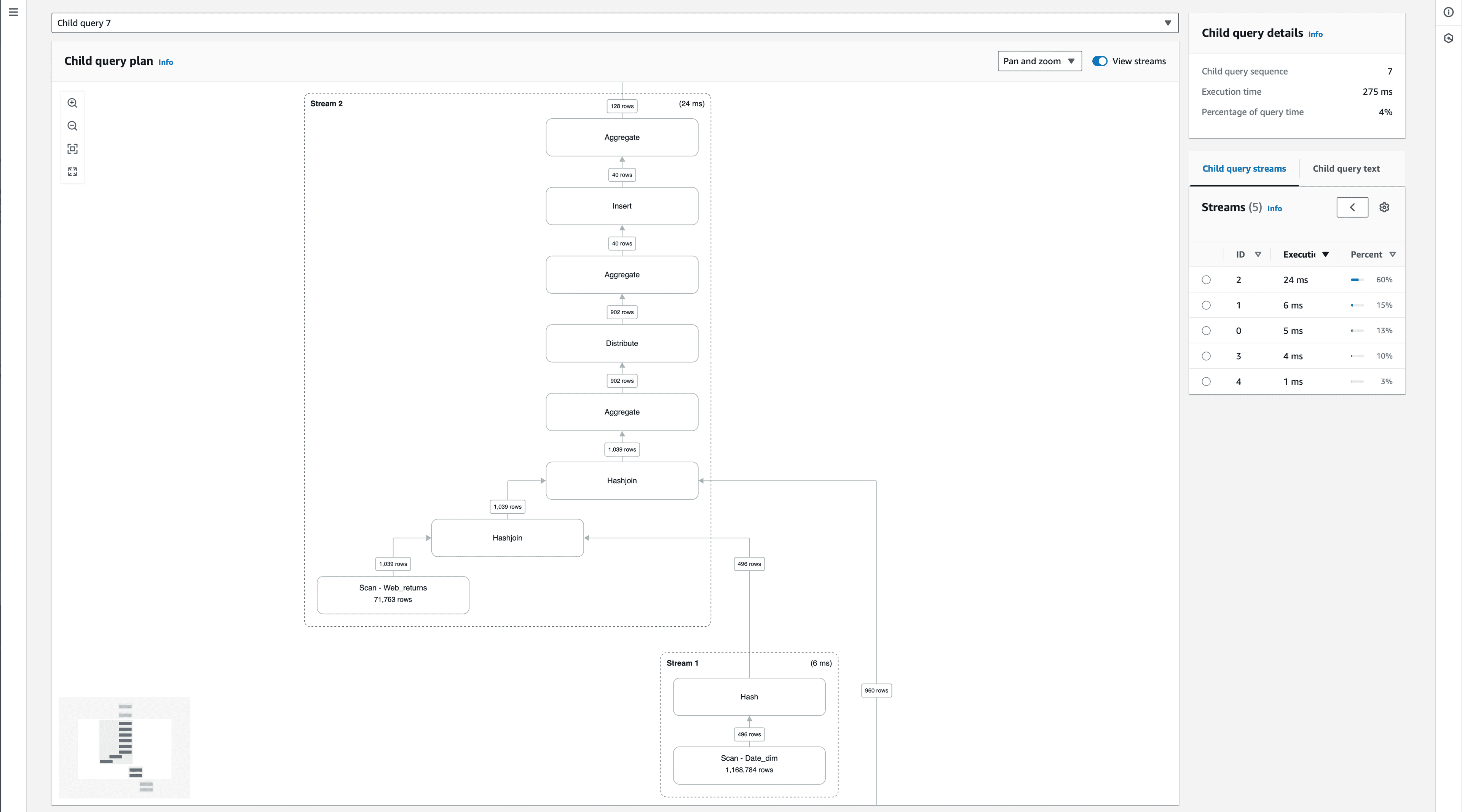
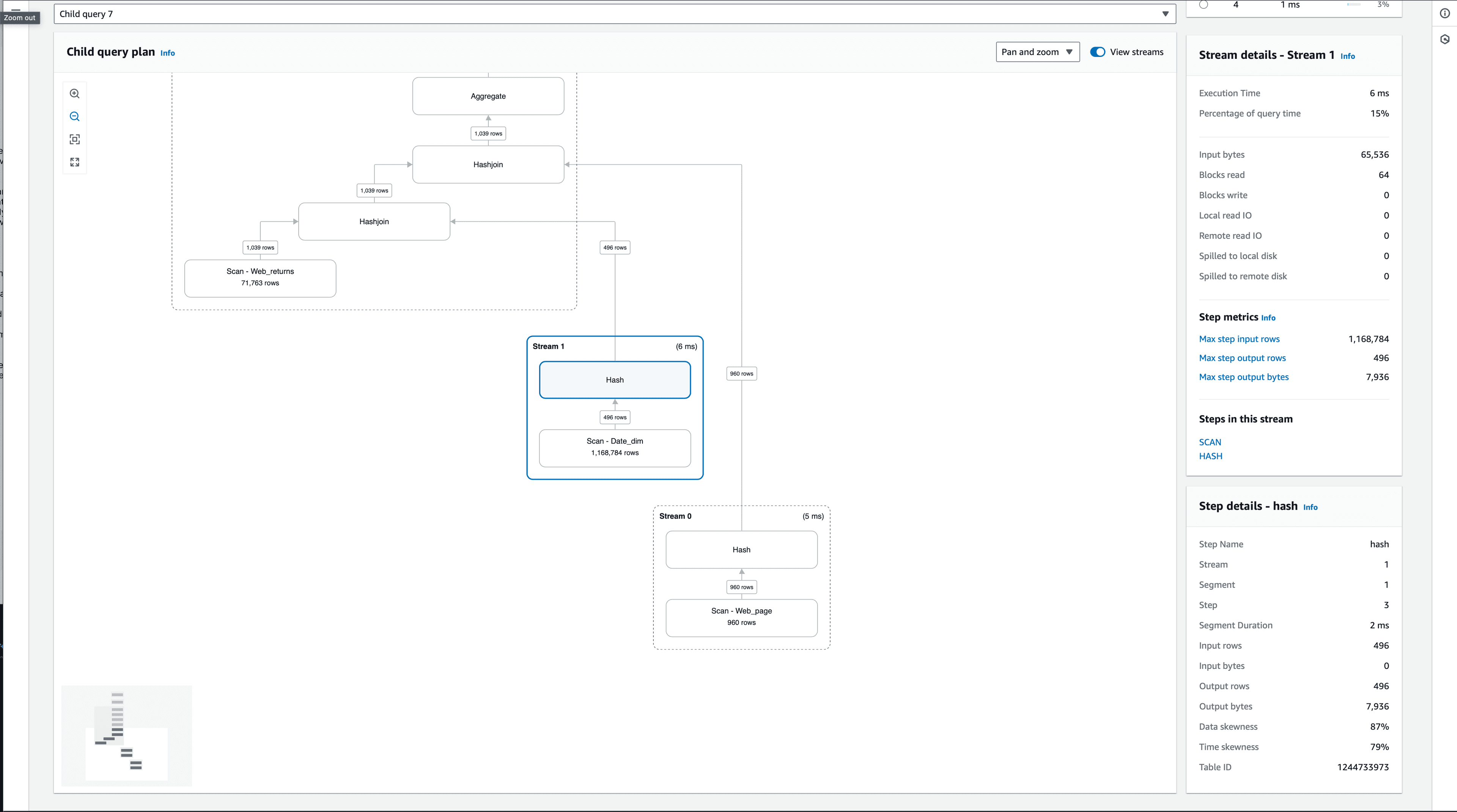
The team was exploring a new feature—Query Profiler—that would significantly enhance observability and troubleshooting for Amazon Redshift customers. The goal was to provide a visual, interactive representation of query execution plans, enabling customers to understand performance bottlenecks and optimize their workloads more effectively.
Task
I was tasked with prototyping the Query Profiler from the ground up.
The feature needed to:
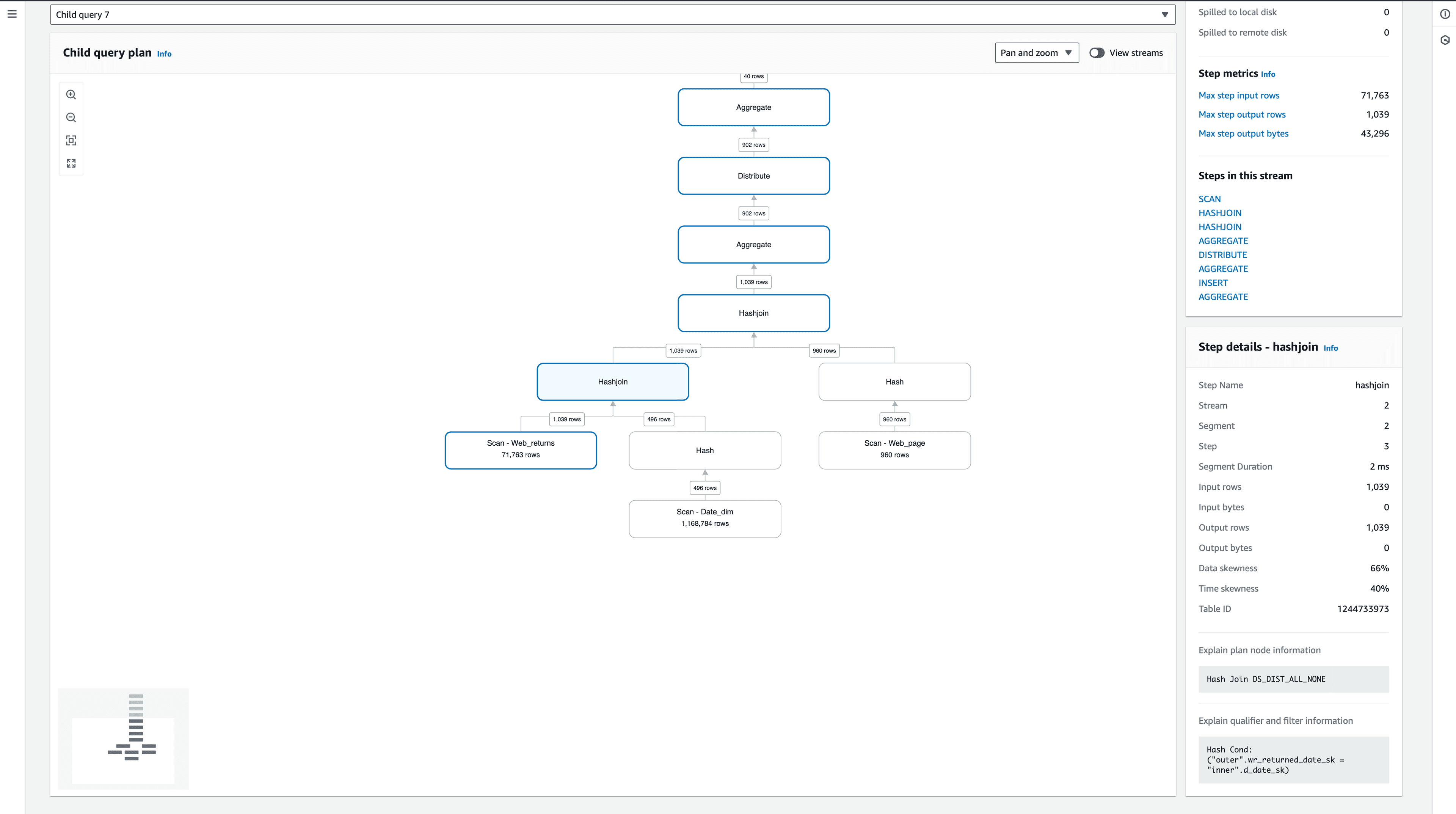
- Visually represent complex query execution plans as an interactive tree
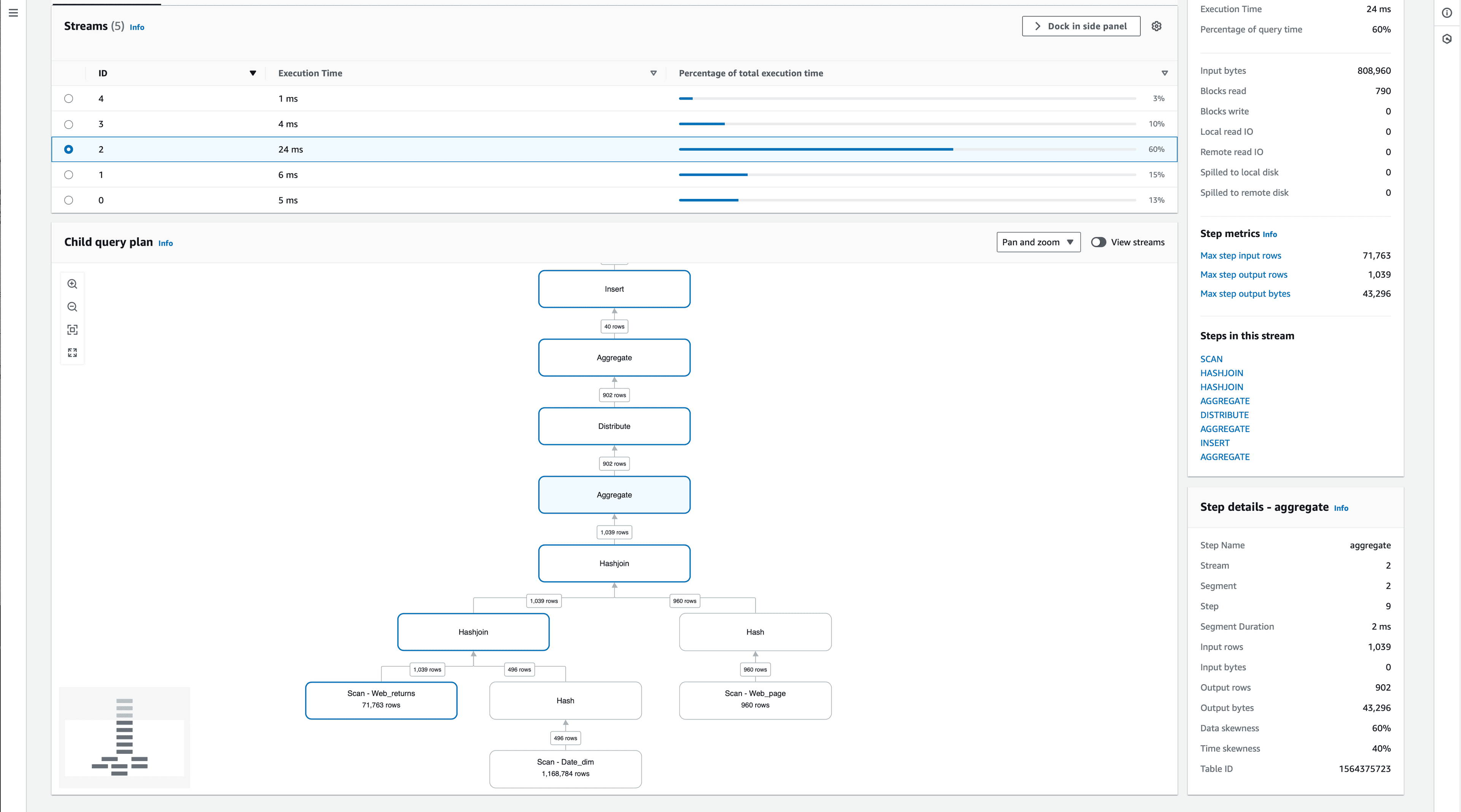
- Enable sorting and comparison of streams and steps
- Surface long-running operations to identify performance optimization opportunities
- Translate low-level system data into an intuitive, human-readable experience
The challenge was highly technical and ambiguous, with no established implementation path.
Action
Technical Exploration & Architecture Decisions
I first immersed myself in the problem space—learning SQL and deeply understanding Redshift system tables and query execution mechanics.
On the front-end, I evaluated multiple tree-mapping and graph-rendering libraries. For example:
- I explored building the visualization entirely with D3, but determined it would require significant custom infrastructure and would not integrate cleanly with a React-based architecture.
- I ultimately selected ReactFlow, which provided many core graph features out-of-the-box and reduced engineering risk.
This early technical validation de-risked the project by preventing investment in an unsuitable stack.
Bridging Backend Gaps
As the prototype evolved, I identified a major constraint: the existing Redshift APIs did not provide the structured output necessary to power the desired UX.
Rather than scaling back the vision, I worked with database engineers to define a logical ruleset that could transform raw system table output into a structured representation. I designed and implemented a transformation layer that:
- Parsed raw Redshift system data
- Applied a deterministic rules engine
- Generated a normalized, interactive tree structure for the front-end
This effectively created the missing abstraction layer needed to make the feature viable.
Technical Leadership & Cross-Functional Alignment
As the prototype matured, I became the central knowledge source on feasibility, constraints, and tradeoffs. I consolidated my findings into the official technical design document, detailing:
- Functional and non-functional requirements
- Known risks and mitigation strategies
- Front-end and backend implementation plans
- Business logic and transformation rules
I presented the proposal to senior leadership, and the team moved forward based on my recommended approach.
From there, I led weekly cross-functional syncs that included:
- Front-end and backend engineers
- Product managers
- UX designers
- Database engineers
- Technical writers
- Solutions architects
I continuously iterated on the prototype to validate assumptions quickly and inform decision-making.
On the implementation side, I wrote TypeScript, SQL, React, and SCSS. While the initial architecture prioritized rapid prototyping, I later hardened the codebase by:
- Fully typing interfaces and data models
- Adding comprehensive documentation and JSDoc comments
- Refactoring for clarity, maintainability, and extensibility
This ensured the system was production-ready and scalable for future contributors.
Result
What began as a prototype evolved into a fully realized production feature, which I ultimately built and delivered end-to-end.
The Query Profiler was widely recognized as a significant UX advancement for Redshift customers. It enabled deep visibility into query execution and made performance bottlenecks far easier to diagnose. Internally, it was regarded as one of the most advanced profiling experiences across AWS data services at the time.
The success of the project strengthened cross-team trust in my technical leadership and directly contributed to my promotion to Senior Design Technologist shortly after launch.
Lessons Learned
This project reinforced several key lessons:
- I thrive in highly ambiguous, technically complex problem spaces.
- Strong leadership often means illuminating unknowns—building tangible prototypes so teams can react, critique, and refine.
- Some answers do not emerge through discussion alone; they materialize through experimentation and iteration.
- A Design Technologist can uniquely bridge engineering depth and UX clarity—turning raw system complexity into intuitive customer value.
This experience solidified my ability to lead cross-functional innovation from zero-to-one and deliver meaningful, customer-facing impact.